Hello! I'm your AI assistant, Teny. Ask me about tenants' rights in upstate New York!
User Agreement
PURPOSE: I understand that Teny 2.0 is a tool powered by artificial intelligence (AI) that answers each question asked about the Tenants’ Rights Guide in a question-and-answer (Q&A) format. It is designed to help residential tenants in upstate New York learn their rights in a more digestible manner. A response can generally explain tenants’ rights, legal concepts and terminology, as well as standard procedures in landlord-tenant law. This information may not apply to tenants in New York City or Long Island. Unlike other AI tools, it is not conversational and cannot respond based on a question I asked previously.
SOURCE: I understand that this tool does not source from random unvetted information across the internet. All information provided is based solely on the Tenants’ Rights Guide, which is updated every academic semester by the Cornell Law School Tenants Advocacy Program. It was last updated in September 2025.
LIMITS OF AI: Responses are stored and reviewed by the Cornell Law School Tenants Advocacy Program for accuracy, but each individual response may not be immediately reviewed by an attorney. Some responses may be wrong and/or incomplete, so I agree to independently verify all responses. I will assume any risk of inaccuracy.
NO LEGAL ADVICE: I understand that the responses provided are for general informational purposes only and not intended as legal advice. This tool is not a real lawyer advising me. It does not replace a real lawyer, and does not create an attorney-client relationship. Responses may not apply to my specific situation. I agree not to solicit legal advice from the tool. For specific legal advice, I will call the Cornell Law School Tenants Advocacy Program Hotline at 607-301-1560. If I am an Ithaca tenant in a legal emergency, I will call LawNY at (607) 273-3667.
PRIVACY: To protect my security, I will not share any confidential or personal identifiable information. The privacy policy is available here for more information.
Tenants Dignity and Safe Housing Act (TDSHA) Case Repository
Tracking Legal Wins for Tenants Across New York
The TDSHA Repository is a statewide legal archive managed by the Tenants Advocacy Program. It documents court decisions where tenants secured victories using the Tenant Dignity and Safe Housing Act (TDSHA) — a landmark law aimed at strengthening renters’ rights and enforcing safe living conditions.
What is the Tenant Dignity and Safe Housing Act?
Passed by the New York State Legislature, the Tenant Dignity and Safe Housing Act gives tenants the right to bring special legal proceedings against landlords when their housing violates local or state safety codes or habitability laws.
Under TDSHA, tenants can:
Ask courts to order repairs to dangerous or unlivable housing conditions
Seek other appropriate relief from negligent or unresponsive landlords
This law simplifies the legal process for tenants, helping them assert their rights without needing to file full civil lawsuits.
About the Repository
The TDSHA Repository serves as:
A public database of cases where tenants successfully invoked TDSHA
A resource hub for attorneys, legal aid providers, housing organizers, and tenants
A tool to track how courts across New York are interpreting and applying the TDSHA
Each case entry includes a summary of the ruling, relevant legal language used by the judge, and, where available, copies of the decision or order.
Case Feature
Knight & Crandall v. NOB Trust & Gilbert
A recent ruling from Danby Town Court reinforced tenants’ rights under the Tenant Dignity and Safe Housing Act (TDSHA). The court ordered repairs and awarded over $5,800 in rent abatement, excess utility costs, and punitive damages. The decision cited violations of state habitability laws and local housing codes. This case is archived in the TDSHA Repository to serve as a reference for future advocacy and legal action.
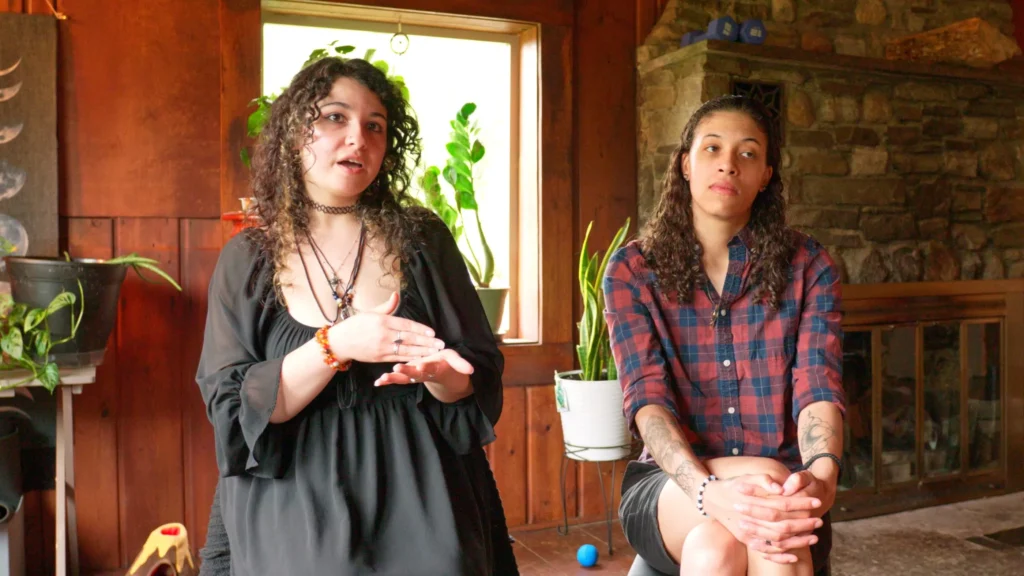
Katelyn Crandall and Quinn Knight were some of the first tenants in New York state to take advantage of a new law making it easier for tenants to seek redress for habitability violations. Photo by Aaron Fernando
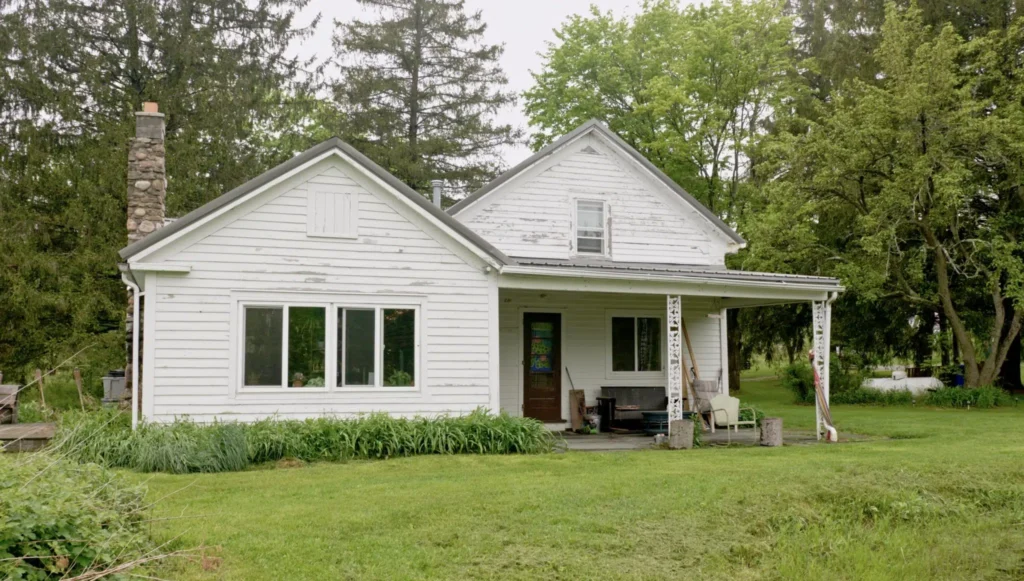
When the boiler of this house failed right before winter 2023, it set up an early test of a new tenant protection in New York state. Photo by Aaron Fernando
Katelyn Crandall and Quinn Knight endured nearly five months without heat after their boiler was damaged, forcing them to rely on costly space heaters and firewood while struggling to keep their pets safe. Their landlord delayed repairs, offered unreasonable options like moving out, and eventually stopped communicating, leading to high energy bills, financial strain, and unsafe living conditions before they used the Tenant Dignity and Safe Housing Act to take legal action
We inform you that this site uses own, technical and third parties cookies to make sure our web page is user-friendly and to guarantee a high functionality of the webpage. By continuing to browse this website, you declare to accept the use of cookies.