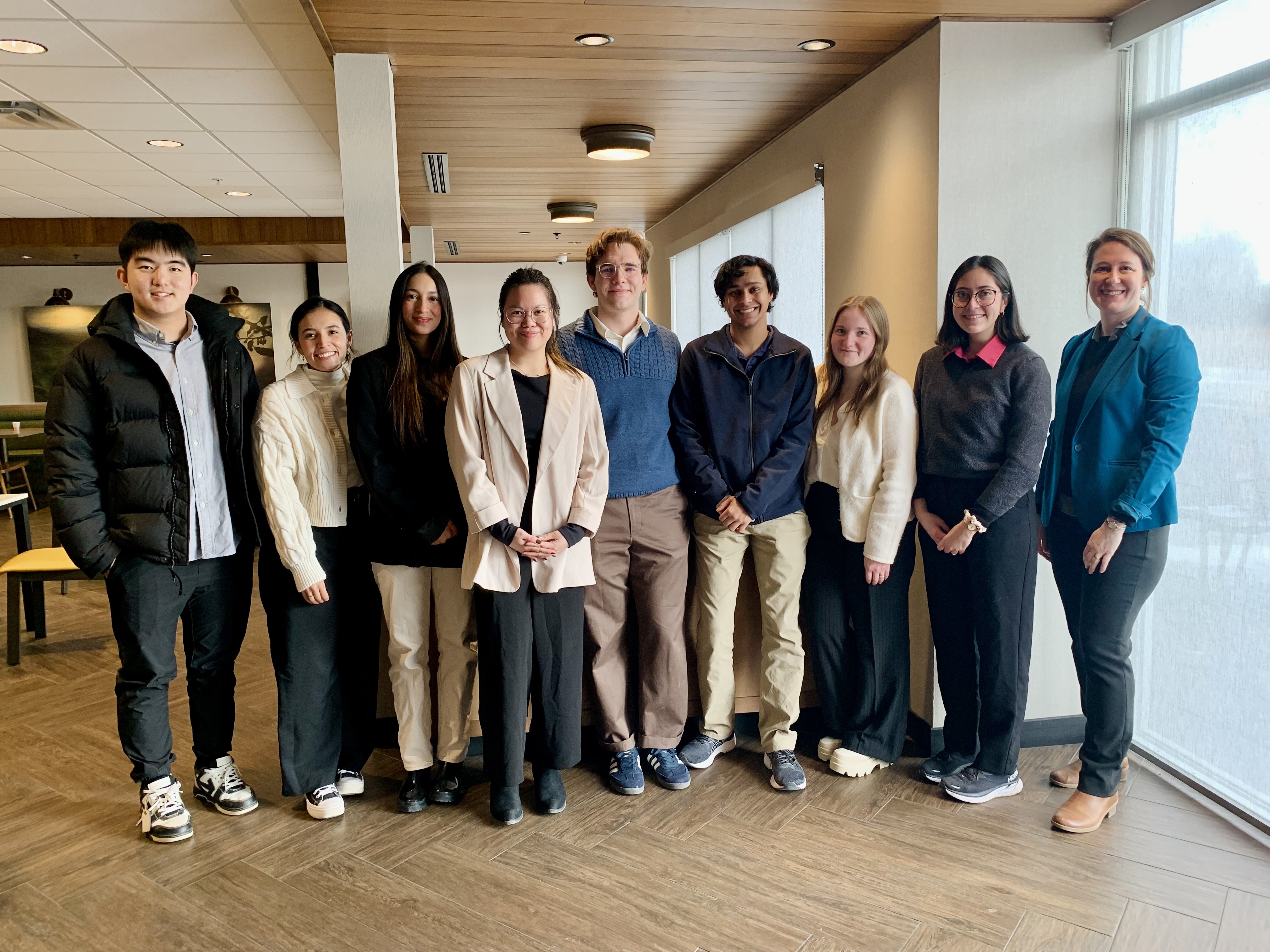
1L Immigration and Advocacy Clinic – Batavia Trip 2025
The 1L Immigration Law & Advocacy Clinic (ILAC) of Cornell University’s Migration and Human Rights Program has long focused on direct, on-the-ground immigration work.
But what began as direct-services advocacy has also grown outward into a multi-state detention project.
After bringing a group of law students to visit a detention facility in 2019, MHRP co-director Jaclyn Kelley-Widmer saw how clearly students responded to client interactions and how urgently communities needed accessible legal information. “Sometimes it’s just being able to provide people with accurate and complete legal data points that they otherwise would have a hard time accessing,” Kelley-Widmer said.
The detention project now spans multiple regions, including a initiative in Louisiana in collaboration with a local chapter of the American Civil Liberties Union, as well as the Buffalo Federal Detention Facility in upstate New York, where students support Know-Your-Rights sessions, conduct intakes, and provide invaluable legal information.
Triage interviews, for example, can be as short as five minutes, yet often answer life-altering questions: Should a client fight a case and pursue release? Does a client have a legally viable path forward?
“Immigration detention is a black box, and it’s hard to know what’s happening,” Kelley-Widmer said. “Our work seeks to meet the enormous needs of people inside and bring transparency to a system that keeps them isolated.”
Detention work has become critical as the immigration enforcement landscape evolves. Other ILAC projects include the Path2Papers (P2P) initiative, which guides Dreamers in complex employment-based cases, and work representing clients in their applications for asylum and other humanitarian relief.
While P2P projects and other casework focuses on long-term stability for clients, Kelley-Widmer said, the detention project addresses other immediate, urgent needs of the local immigrant community.
“Whether you’re helping clients win asylum or empowering them to make the best decision for themselves and navigate the legal process, are important components of work in detention,” Kelley-Widmer said. “I hope the clinic can continue to build expertise in these dual areas of deportation defense and detention.”
Recognizing the immense scale of the work, she is also coordinating a national network of advocates focused on detention issues. The network includes NGOs, law school clinics, and practitioners across the country who participate in monthly one-hour calls to strategize. On any given month, 20 to 50 participants join the discussion, and many more take part in a listserve to share notes, resources, and links to help the broader immigration community to stay current on trends, litigation strategies, and emerging issues.
Breakout discussions have focused on topics including detention conditions, habeas litigation, language-access problems, and preparing students to enter facilities.
“These calls help the advocacy community to create a coordinated, informed response to the massive scale of detention work,” Kelley-Widmer said.
Students have also complemented their work with expanded advocacy tactics, including public-facing meetings.
“Students are learning while serving a community that has extraordinary needs,” Kelley-Widmer said. “The clinic will continue to adapt as things change.”
