Hello! I'm your AI assistant, Teny. Ask me about tenants' rights in upstate New York!
User Agreement
PURPOSE: I understand that Teny 2.0 is a tool powered by artificial intelligence (AI) that answers each question asked about the Tenants’ Rights Guide in a question-and-answer (Q&A) format. It is designed to help residential tenants in upstate New York learn their rights in a more digestible manner. A response can generally explain tenants’ rights, legal concepts and terminology, as well as standard procedures in landlord-tenant law. This information may not apply to tenants in New York City or Long Island. Unlike other AI tools, it is not conversational and cannot respond based on a question I asked previously.
SOURCE: I understand that this tool does not source from random unvetted information across the internet. All information provided is based solely on the Tenants’ Rights Guide, which is updated every academic semester by the Cornell Law School Tenants Advocacy Program. It was last updated in February 2026.
LIMITS OF AI: Responses are stored and reviewed by the Cornell Law School Tenants Advocacy Program for accuracy, but each individual response may not be immediately reviewed by an attorney. Some responses may be wrong and/or incomplete, so I agree to independently verify all responses. I will assume any risk of inaccuracy.
NO LEGAL ADVICE: I understand that the responses provided are for general informational purposes only and not intended as legal advice. This tool is not a real lawyer advising me. It does not replace a real lawyer, and does not create an attorney-client relationship. Responses may not apply to my specific situation. I agree not to solicit legal advice from the tool. For specific legal advice, I will call the Cornell Law School Tenants Advocacy Program Hotline at 607-301-1560. If I am an Ithaca tenant in a legal emergency, I will call LawNY at (607) 273-3667.
PRIVACY: To protect my security, I will not share any confidential or personal identifiable information. The privacy policy is available here for more information.
Under New York State law, tenants are free to organize and form tenants’ unions. Harnessing this collective power can help shift the power imbalance between tenants and landlords. In this section, you will find information about the benefits of organizing, tenants’ right to organize, and protections against landlords who try to prevent tenants from organizing or retaliate against them for doing so.
13.2 Benefits of Organizing
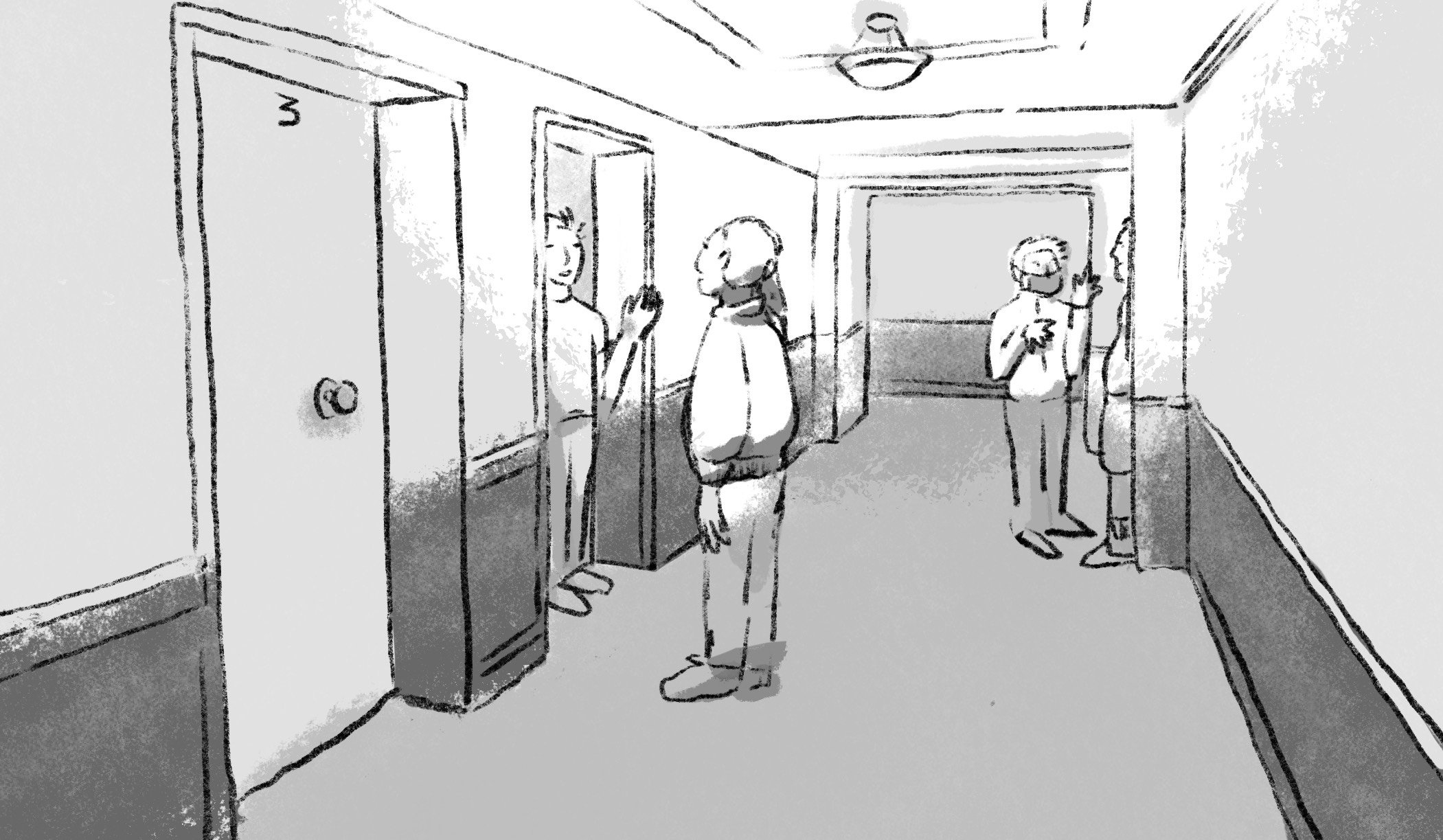
Working together is far more effective than working alone! If your landlord is violating your rights or ignoring your requests, then they are probably doing the same to other tenants as well. You may want to contact your neighbors to see if they are facing similar problems with their housing or your landlord.
You can also contact your local tenants’ organization to get connected to other tenants in your area and meet experienced organizers who can answer questions about your rights and options. Working with a tenants’ organization can help you get the repairs, refunds, and quality of living you deserve. Residents of Ithaca and the surrounding area can contact the Ithaca Tenants Union’s Organizing Help Line by visiting https://www.ithacatu.org/get-help.
A tenants’ organization can help you and your neighbors lay out your options for creating or utilizing your leverage against your landlord, like withholding rent, taking them to court, or reporting violations, as discussed in other sections of this guide.
13.3 Your Right to Organize
Generally, tenants’ rights organizations are allowed by law to meet in any common area of the property, as long as the meeting does not block others’ access to the property or its facilities and the meeting is held during reasonable hours in a peaceful manner.
Your right to organize is protected by New York State law. It is unlawful for your landlord to prevent you from joining or forming a tenants’ rights organization. It is also unlawful for your landlord to retaliate against you for doing so. Please refer to New York Real Property Law Section 223-band New York Real Property Law Section 230.
This website uses cookies
We inform you that this site uses own, technical and third parties cookies to make sure our web page is user-friendly and to guarantee a high functionality of the webpage. By continuing to browse this website, you declare to accept the use of cookies.