2.1 Introduction
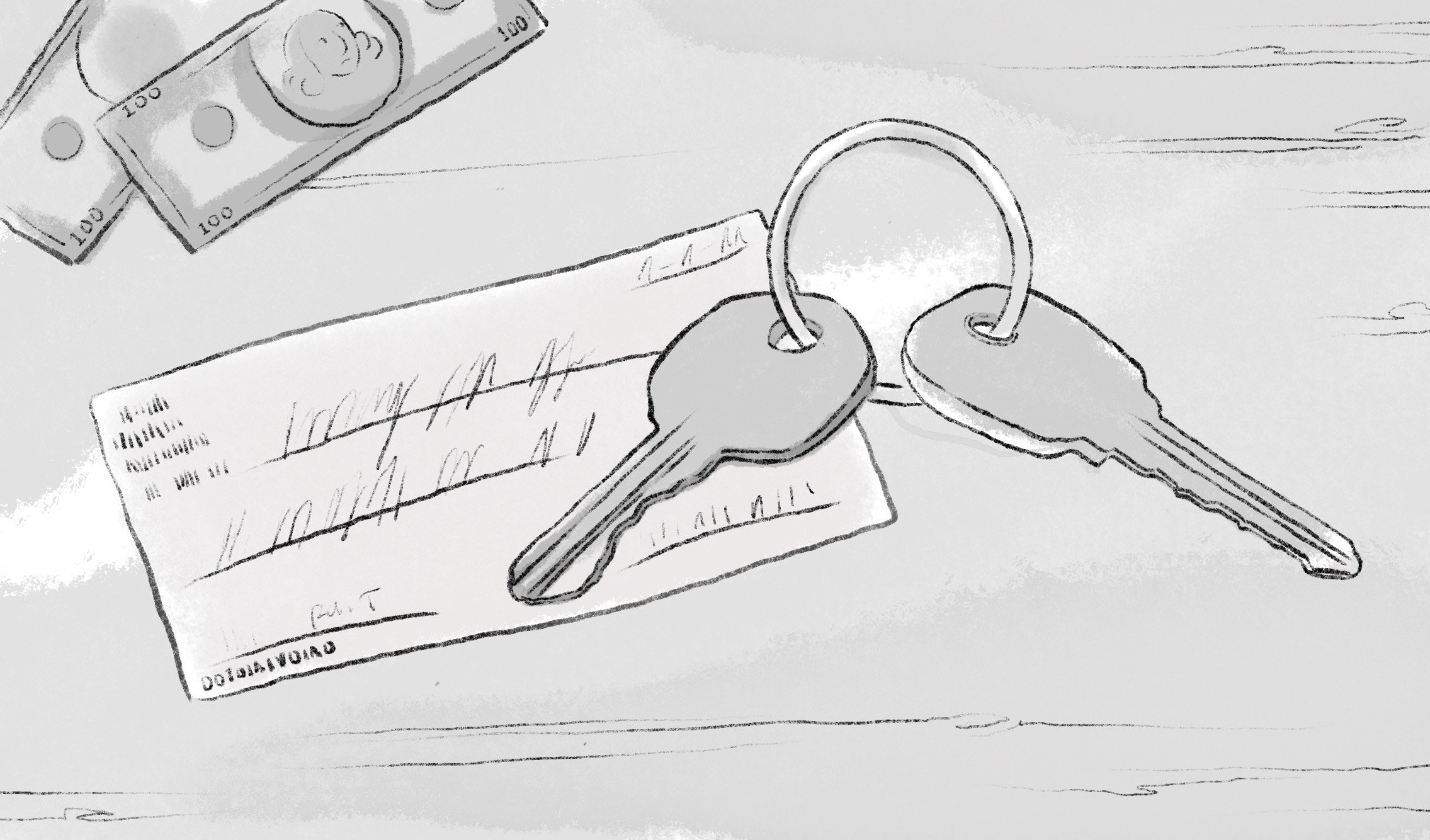
In almost every lease or rental agreement, there is a requirement that the tenant pays a security deposit to the landlord before the start of the rental term. Landlords and tenants often disagree over the amount of the deposit that should be returned to the tenant at the end of a rental term. Landlords are required to inform tenants of the reason any amount of the security deposit is not being returned by providing an itemized list of deductions within fourteen (14) days of the tenant moving out. If the landlord does not return a portion of the security deposit and does not provide an itemized list articulating the reason for the deduction, tenants should request one, as the landlord must inform the tenant of any withholding. Additionally, a landlord may try to charge a tenant other fees and deposits under the rental agreement that are against the law.
If a landlord withholds an amount from the security deposit that they are not entitled to, the tenant may need to file a claim in small claims court or another court to get the security deposit back.
2.2 Unlawful Deposits and Fees
Under New York State law, it is unlawful for your landlord to charge certain deposits or fees, or for deposits or fees to exceed a specific amount.
Under New York State law, a landlord is not allowed to charge or collect:
- Security deposits or rent advances greater than one-month’s rent (New York General Obligations Law § 7-108).
- Last-month’s rent, or any other month’s rent, in advance if they have also collected a security deposit.
- Cleaning fees or deposits separate from the security deposit (New York Real Property Law § 238-a).
- Credit check or background check fees greater than the actual cost or $20.00, whichever is less (New York Real Property Law § 238-a).
- If a tenant can provide a copy of a credit check or background check conducted within the past 30 days, the landlord must accept it and waive any fees.
- If the landlord runs the credit and background checks, they must provide the tenant a copy before collecting any fees.
- Application fees (New York Real Property Law § 238-a).
- Pet deposits, if the deposit, together with any other security deposit or rent advance, exceeds one-month’s rent (New York Real Property Law § 238-a).
- Late fees for unpaid or late rent exceeding $50.00 or 5% of the monthly rent, whichever is less (New York Real Property Law § 238-a).
- Fees greater than 110% of the actual costs for providing a tenant with a replacement key to their unit, for the first three replacement keys requested within a calendar year (New York Real Property Law § 235-i).
Please refer to New York General Obligations Law § 7-108 (security deposits), New York Real Property Law § 238-a (other fees), and New York Real Property Law § 235-i (key fees).
A tenant is entitled to use various methods to pay rent. According to NY CLS Real P § 235-g, a landlord cannot require a tenant to use an electronic billing or payment system as the sole method for paying rent, nor can they charge a fee for choosing not to use such a system. Additionally, upon receiving rent payments in cash or any instrument other than a personal check, the landlord must provide a written receipt. A landlord can contract out of paying a broker’s commission as long as it is clearly outlined in the lease or brokerage contract.
Tenants in New York can pay rent using cash, certified checks, money orders, and personal checks, and they cannot be compelled to use electronic payment systems exclusively.
A landlord can contract out of paying a broker’s commission as long as it is clearly outlined in the lease or brokerage contract. The liability of the broker fee can be outlined in the contract signed by the parties. Contracting around or into obligations can generally be done by two sophisticated parties.
2.3 Security Deposits and Rent Advances
As stated above, a landlord may not charge or collect any deposit or advance greater than the amount of one-month’s rent. Therefore, if a landlord collects a security deposit equal to one-month’s rent, they cannot also charge the tenant a rent advance, such as “last-month’s rent.” A security deposit cannot be used to pay rent, except for any unpaid rent due and owed after a tenant moves out. Additionally, a landlord cannot request a non-refundable security deposit; this is unlawful and any agreement accepting it is void.
After a tenant moves out, the security deposit must be returned to the tenant within 14 days. If any amount has been deducted from a deposit, the landlord must send the tenant an itemized list of these deductions within the same 14-day period. Deductions are only lawful for:
- Costs due to non-payment of rent.
- Damage caused by the tenant beyond normal wear and tear.
- Non-payment of utility charges payable directly to the landlord.
- Moving and storage of the tenant’s belongings after the termination of the lease.
If a landlord does not return the deposit or provide an itemized list of deductions within the 14-day period, the landlord forfeits any right to keep the deposit, regardless of how damaged the apartment is or how much rent may be owed, and must return the entire amount to the tenant. Tenants may bring a claim in Small Claims Court to recover the security deposit from the landlord. Please refer to New York General Obligations Law § 7-108.
If a property has six or more rental units, the landlord must place the security deposit in an interest-bearing account and return any interest earned on the deposit to the tenant. In this situation, the landlord is allowed to keep one percent (1%) of the total amount of the deposit as an “administrative fee.” Please refer to New York General Obligations Law § 7-103.
2.4 When a Landlord Can and Cannot Deduct from a Security Deposit
A landlord CAN withhold or deduct from a tenant’s security deposit for:
- Damage a tenant causes to the rental unit beyond ordinary wear and tear.
- “Beyond ordinary wear and tear” can include holes in the walls, excessive damage to furniture, broken or damaged appliances, excessive stains or damage to flooring, water damage from neglect, and pet-related damage.
- This includes all damages caused by the tenant, other occupants, or the tenant’s guests, and not derived from the regular, reasonable use of the leased premises.
- Excessive and unreasonable cleaning, trash removal, or removing or storing a tenant’s furniture or other personal belongings after the termination of the lease agreement.
- Unpaid rent or utility charges payable directly to the landlord under the lease not paid upon termination of the lease agreement.
A landlord CANNOT withhold or deduct from a tenant’s security deposit for:
- Damage or disrepair in the unit that is not the tenant’s fault or does not go beyond ordinary wear and tear.
- Damage caused by a prior tenant.
- Routine cleaning that prepares the space for new tenants, which would reasonably need to happen after every move-out, like carpet cleaning, painting, repairing minor damage, and removing dirt or dust.
Effective June 14, 2019, the Housing Stability and Tenant Protection Act of 2019 eliminated a landlord’s ability to withhold a portion of a residential tenant’s security deposit for attorneys’ fees or late fees. See General Obligations Law § 7-108(1-a)(b).
Remember, even if your landlord is deducting from your security deposit for a legitimate reason, they must give you an itemized list of any deductions within 14 days of your move-out, or else they must return your full deposit.
A landlord shall not charge a tenant a fee for the reproduction of keys to a single dwelling greater than one hundred ten percent of the actual cost of reproduction, provided such limitation shall not apply if a tenant requires the reproduction of keys for a single dwelling more than three times in a calendar year.
2.5 Move-in and Move-out Inspections
Disagreements between tenants and landlords over security deposits are very common. It is important for tenants to document the condition of the rental unit before moving in and moving out.
Landlords are required to offer an inspection of the rental unit before a tenant moves in. It is best to ask for an inspection if a landlord doesn’t offer one. After the inspection, the landlord must create a written agreement listing any damages that existed before the tenant moved in. Landlords may not deduct costs associated with conditions that existed prior to move-in.
It is important to carefully inspect the apartment. You may want to use a checklist and take pictures and videos of any damage or defects. Inspect the entire rental unit, including but not limited to:
- All parts of any outdoor spaces, including garages, porches, balconies, entrances, exits, or walkways;
- All parts of every room in the rental unit, including the walls, floors, ceilings, doors, door frames, locks, and windows in any bedrooms, bathrooms, common areas, kitchens, closets, or other spaces; and
- All parts of any appliances, fixtures, or furniture provided with the apartment, including refrigerators, stoves, microwaves, dishwashers, cabinets, counters, shelves, sinks, toilets, showers, baths, lights, light switches, outlets, beds, mattresses, couches, tables, chairs, rugs, mirrors, air conditioning units, heaters, and vents.
Any notes, photos, and videos should be included in a written agreement with your landlord. Landlords may have a standard form or checklist they regularly use for these inspections. If a landlord already has a form or checklist, it is important to add any additional damages or defects that might not be covered by their form. Taking these steps may help protect a tenant from improper charges to their security deposit when they move out.
A tenant is also entitled to a move-out inspection if the landlord has at least two weeks’ notice of the date the tenant is moving out. The landlord is required to notify the tenant in writing of their right to request an inspection. The inspection should happen one to two weeks before the move-out date. After the inspection, the landlord is required to create an itemized list of any damages they intend to charge for, giving the tenant an opportunity to fix them before leaving. If the landlord does not offer the inspection, the tenant may request it themself.
Again, a landlord must return a security deposit or provide an itemized list of any charges within 14 days after the tenant has moved out. Failure to do so may result in the forfeiture of the entire security deposit. Please refer to New York General Obligations Law § 7-108.
2.6 How to Get Your Security Deposit Back
If a landlord wrongfully withholds a security deposit or fails to provide an itemized list within 14 days, the first step a tenant should take is to send a demand letter. The letter should inform the landlord of the wrongful withholding and state that the tenant will sue in small claims court if the funds are not returned by a certain date.
If a landlord refuses to return a security deposit, mediation is an option. Ithaca tenants can use the Community Dispute Resolution Center for assistance. For more information, visit https://www.cdrc.org/.
Finally, tenants can sue landlords in small claims court. In these lawsuits, the landlord has the burden to prove that the amounts withheld are reasonable. If a tenant wins, a judge can award punitive damages of up to twice the amount of the security deposit if the landlord’s violation is found to be willful.
Successors in interest (new property owners) are liable for security deposits if they have actual knowledge of the deposit. They must notify tenants within 30 days of the property transfer if there is no record of a security deposit. Landlords and tenants cannot waive or modify the rights guaranteed by the Security Deposit Law, even if the lease agreement says otherwise.
2.7 Disability-Related Modifications
Landlords may be able to deduct from a tenant’s security deposit for the reasonable costs of removing disability-related modifications made by the tenant to the unit.
2.8 Utility Payments
Generally, tenants are responsible for paying for the utilities they actually consume. The division of a utility bill among tenants in a building is subject to specific regulations and the lease agreement. A utility bill may be divided equally if the lease stipulates such an arrangement, or tenants may agree to this privately. Tenants may also ensure that the utility bill is divided equally through private contracting, outside of the lease agreement.
If a tenant pays a utility bill that the landlord was responsible for, the tenant may deduct that amount from a future rent payment. If a landlord’s failure to pay for a utility service results in a discontinuance of that service, the landlord may be liable for compensatory and punitive damages, as this may constitute a breach of the warranty of habitability.